Going Natural: How to Grow Out a Relaxer
Thinking of going natural? Whether you do the big chop or grow it out slowly, here is what to expect and how to keep your hair in one piece on the way.
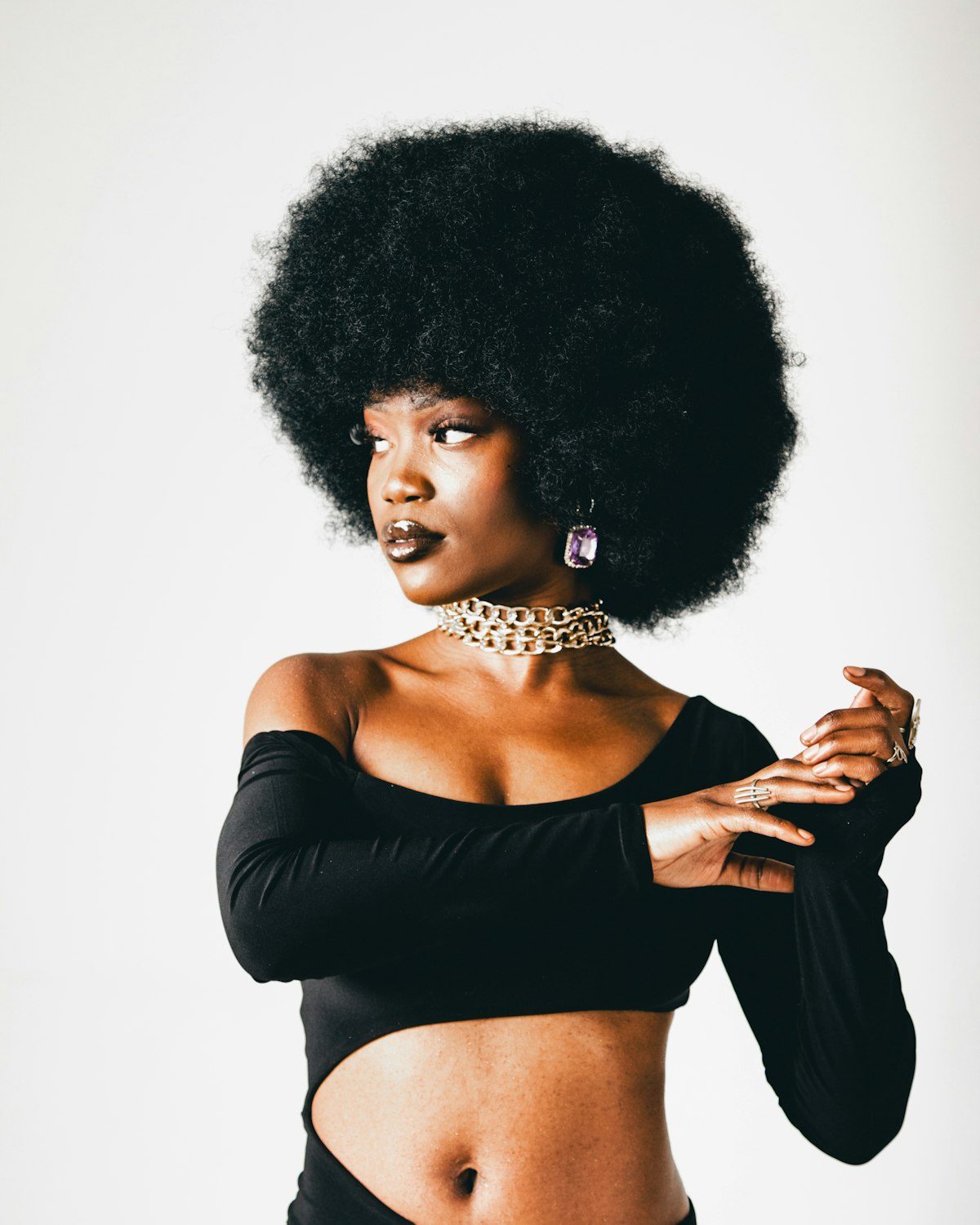
Women of African descent have had a love affair with their hair since antiquity, and more and more of us are going back to it exactly as it grows. Natural hair, with no relaxer and no straightening, shows off what is unique about Black beauty, and it comes with a huge choice of styles: close-cropped afros and fades, tiny twists, locs, big cascading braids. Not to mention freedom from chemicals, burns and the six-weekly touch-up.
Some women also have their health in mind: in 2022 a large US study, the NIH Sister Study, followed nearly 34,000 women for about eleven years and found that those who used chemical hair straighteners more than four times a year were roughly two and a half times as likely to develop cancer of the womb as women who never used them. The cancer is still uncommon, and the study shows a link, not proof of cause, but it is worth knowing.
Thinking of joining in? Here is what you need to know first.
There is no going back, only growing out
A relaxer permanently changes the hair it touches. Nothing will turn relaxed hair curly again. Not a special shampoo, and certainly not the old wives' tale about rinsing it in milk!
The only cure is time. New hair grows from the roots in its natural texture, and bit by bit the relaxed hair is trimmed away until what is left is the hair you were born with. Expect somewhere between a third and half an inch of new growth a month, which is four to six inches a year. So growing out a full head takes at least a year, and often two or more if you want to keep some length.
Start with a visit to a stylist you trust for an honest look at the condition of your hair, then choose your route.
Route one: the big chop
Cut off all the relaxed hair in one go and start again with a short natural crop. It is the quickest way and the healthiest for the hair, and plenty of women find it liberating. It is also a big change overnight, and not everyone is ready for that.
Route two: transitioning
Grow the natural hair out gradually, trimming the relaxed ends a little at a time. The catch is that for months you will have two textures on one head, and the point where they meet is very fragile. Most breakage happens right there, so the whole game is to protect that join: handle the hair as little as possible, keep it moisturised, and detangle slowly with plenty of conditioner.
These are the classic ways to get through it.
Braids and extensions
Braids, with or without added hair, tuck the two textures away together and save you from daily combing. Three rules. Don't let them be put in too tight: if it hurts, it is doing damage, so ask for it to be redone. Keep added hair light, because relaxed hair is already weakened and heavy extensions pull hardest on it. And take them out on schedule, after six to eight weeks or so, then wash, condition and rest your hair before the next set.
Wigs
Want to look polished while it all happens underneath? Go undercover. Wigs come in every style and texture and can be cut to flatter your face. Look after what is under there, though:
- Wash, condition and braid your own hair neatly first, and wear a wig cap.
- Don't wear the wig every waking hour, and go easy on glue, tight bands and combs. It is the rubbing and pulling at the hairline, day after day, that thins the temples.
- Take it off whenever you can and let your scalp breathe.
- If your scalp feels dry or itchy, massage in a little light oil for comfort.
- At night, wrap your hair loosely in a silk or satin scarf, or sleep on a satin pillowcase.
Light heat on the new growth
Some stylists will gently press or blow out just the new growth so it blends with the relaxed lengths. It can make the two textures easier to manage, but it has to be done with care and not too often. A gentle press washes out, but hair that has been scorched does not recover: it is weakened for good, the curl may never spring back, and the only cure is to grow it out. It would be a pity to do that to the very hair you are trying to grow.
Whichever route you choose
- Be patient. There will be awkward months.
- Trim regularly. Every trim is a step closer.
- Learn your new texture as it comes in. It may not be what you remember, or what you expected.
One thing is certain: there is a head of healthy natural hair at the end of it, and it is all yours.