Black Hair Care: The Basics
Why tightly curled hair is more fragile than it looks, and a simple routine for washing, conditioning, drying and styling it without breakage.
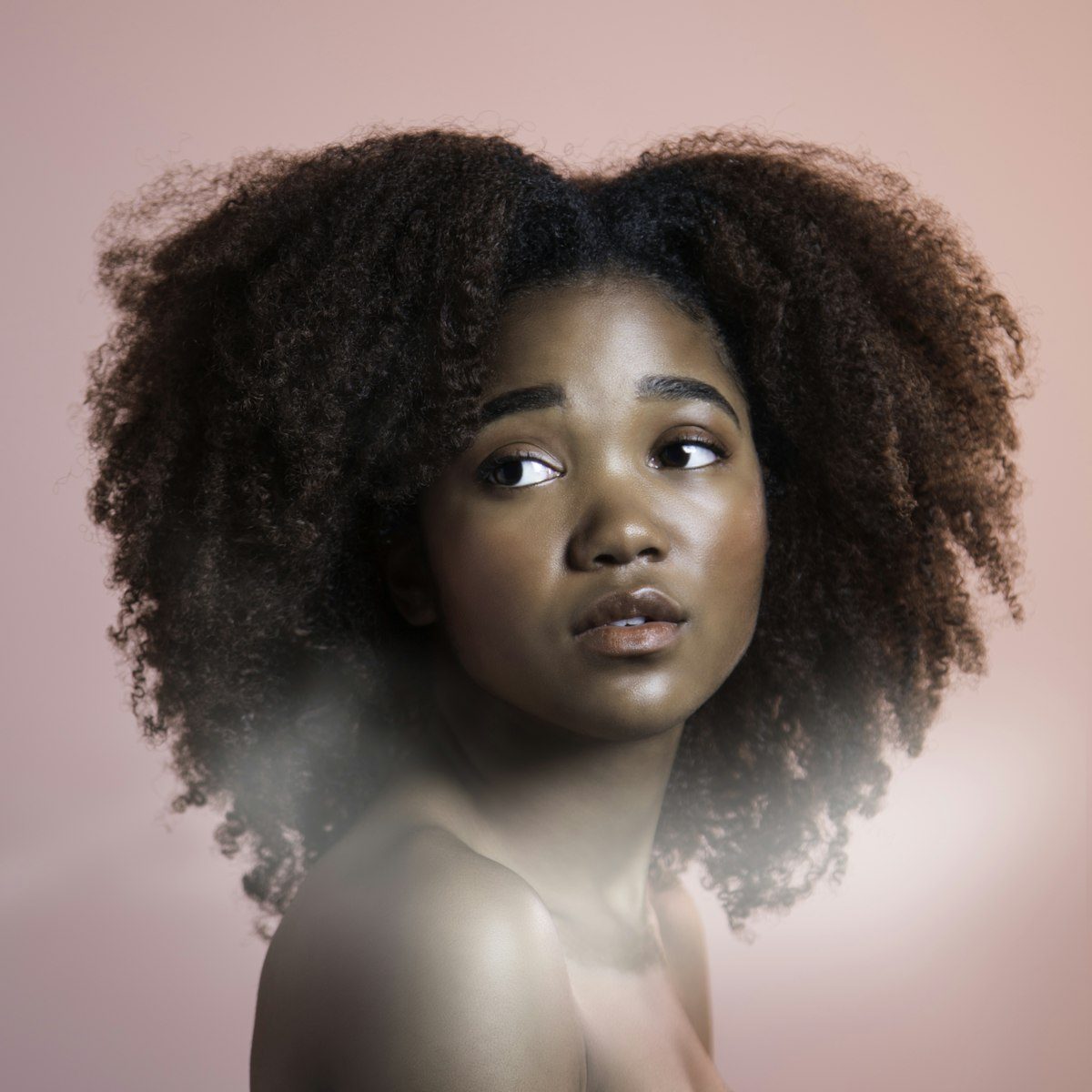
It looks strong. A full head of tightly curled hair has body and bounce that straight hair can only dream of. But looks deceive: of all hair types, ours is the most fragile.
The reason is the curl itself. Each strand grows as a tight spiral, like a little spring, and every bend in that spring is a weak point where the strand can snap. The spiral also makes it hard for the scalp's natural oils to travel down the hair, so the ends are nearly always thirsty. Relaxers and heat make styling easier, but both take a toll on hair that was delicate to begin with.
So the first rule of Black hair care is simple: handle with care. Everything below follows from it.
Be kind to your hairline
Tight headbands, tight scarves, rubber bands, and styles that drag the hair hard back from the face all pull at the roots. Keep it up for long enough and the hair at the temples and edges thins, and may not come back.
Get to know your own head, too. The two places where trouble most often starts are the hairline and temples, and the crown. Thinning with age can run in families. Relaxers left on too long, or overlapped onto hair that has already been processed, break the hair and can burn the scalp, and doctors suspect that relaxers, heat and tight styles play a part in a scarring kind of hair loss that starts at the crown, though that has not been proved. Go gently on those spots, and if you notice patches or a widening parting, see a doctor or a trichologist sooner, not later.
Washing
Forget what works for straight hair. Daily washing would strip ours dry. For most people, once every week or two is plenty.
- Loosen the worst tangles first. Dampen the hair or smooth in a little conditioner or oil, then work through it in sections with your fingers or a wide-toothed comb, starting at the ends and moving up to the roots. Never drag a comb through it bone dry.
- Wet thoroughly with warm water.
- Use a gentle, moisturising shampoo, and put your effort into the scalp. Smooth the lather down the length of the hair; don't pile it on top of your head and scrub, which is how tangles are made.
- Rinse well, then squeeze the water out with a towel. Don't rub. Hair is at its weakest when wet.
If you are having a relaxer or colour, the usual salon advice is to leave your scalp alone beforehand: no scratching and no vigorous washing just before the appointment.
Conditioning
This is the step that matters most. Hair that is dry snaps; hair that is moisturised stretches and springs back.
- Condition after every wash, and detangle again while the conditioner is in.
- Follow with a leave-in conditioner to help keep the moisture there.
- Give your hair a deep conditioning treatment regularly, and more often if it is relaxed, coloured or feels rough and porous.
Drying
Heat is the other great thief of moisture.
- Air drying is kindest. Squeeze out the water, then twist or braid the hair loosely and leave it to dry. This also stretches it a little and stops it tangling.
- If you use a dryer, hooded or handheld, keep the heat moderate, use a heat protectant, and stop when the hair is dry. More time under the dryer does not mean more style.
Styling
- Trim ragged ends. A split end only gets worse if it is left, and the hair breaks off higher up.
- Add moisture back with a light cream or balm, and seal it in with a little oil, paying attention to the ends.
- Go easy on heavy gels and sprays, which can leave hair stiff, coated and brittle.
- Ration the heat. Frequent use of hot combs, flat irons and curling tongs is the fastest route to hair that breaks off.
- Sleep on satin or silk, with a bonnet, a scarf or a pillowcase. It is smoother than cotton, so your hair slides instead of rubbing, and it is thought to leave more of your moisture where it belongs.
And your stylist?
See a good one regularly, for trims, treatments and an honest opinion on how your hair is doing. How often depends on your style: relaxed and pressed hair needs more salon care than a low-maintenance natural style. (And see Six Steps to Get the Most from Your Hair Stylist.)
Treat it gently, keep it moisturised, and that fragile hair will reward you.